New Undergraduate Program in Artificial Intelligence (Fall 2026)
Approved by the UCSB Academic Senate in January 2026, the B.S. in AI provides specialized training in machine learning, deep learning, optimization, and interdisciplinary applications.
For additional program details, visit ai.cs.ucsb.edu.
Why Computer Science?
Computer Science is an exciting, challenging, and growing field that impacts the world and everyday life in countless ways.
Computer scientists are involved in creating technology and systems that are used in a wide range of industries, including medicine, communications, entertainment, manufacturing, business, and science. CS research pushes the state-of-the-art in computing theory and practice, and it leads to new technologies that change the world.
Despite all the impressive achievements of the field, we are convinced that there are many more exciting discoveries and applications of computer science yet to come, and you can be part of this process of exploration, discovery, and invention!

Chair's Message
Distinguished Professor Divyakant Agrawal
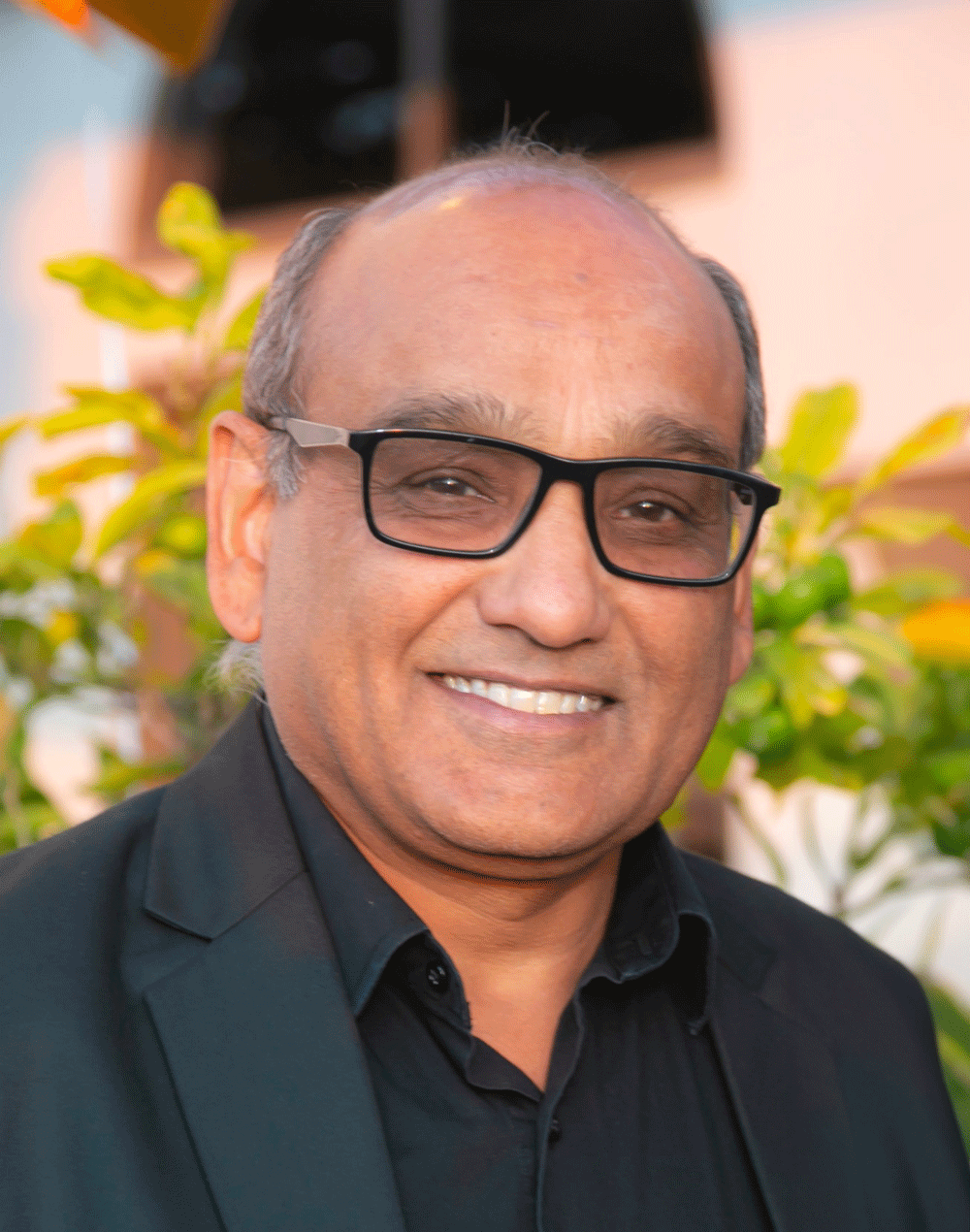
Welcome to the Computer Science Department at the University of California, Santa Barbara!
CS@UCSB is more than a department — it is a community. Here, faculty, students, and staff come together against the backdrop of breathtaking natural beauty to pursue research that matters, teaching that inspires, and collaboration that drives real change. We are intentionally building bridges between disciplines while expanding alumni engagement, mentorship opportunities, and collaborative initiatives that extend beyond the classroom.
Over the past year, the CS@UCSB has continued to evolve at the forefront of transformative technologies and research, highlighted by the launch of our new Bachelor of Science in Artificial Intelligence — designed to prepare students to lead the rapidly changing technological landscape.
Our Mission
The CS department at UC Santa Barbara is widely recognized as one of the top Computer Science departments in the nation, featuring a highly distinguished faculty and excellent students.
Our culture of education and research strongly encourages collaborative, entrepreneurial, supportive, multidisciplinary solutions-driven efforts at both the undergraduate and graduate levels. Our students and graduates shape the future of science and engineering here and around the world. We are committed to providing a respectful and inclusive environment for all members of our community, free from all forms of discrimination and harassment.
The Computer Science Department seeks to prepare undergraduate and graduate students for productive careers in industry, academia, and government, by providing an outstanding environment for teaching and research in the core and emerging areas of the discipline. We bring computational approaches and solutions to some of society’s most vital and complex issues. We are presently engaged in research that promises game-changing breakthroughs in computing and will bring about advances in important areas such as healthcare, communications, education, government, energy efficiency, and the environment. We believe that we will help transform the future; that computing is central to shaping and improving the world by enabling data-driven scientific discoveries and bringing a world of rich, easily-accessible information to individuals everywhere.
The department has been on an impressive upward trajectory for many years, fueled by the quality and impact of our work, the recognition of our faculty, and the success of our graduates.
Announcements

Every frame of every computer-generated film you've ever watched has been shaped by research done right here at UCSB. CS Affiliated Faculty Professor Pradeep Sen and his team have been honored with ACM SIGGRAPH's Test of Time Award for their pioneering 2015 work applying machine learning to image denoising—a breakthrough that transformed computer graphics forever. Congratulations to Professor Sen and the Research Team! 🎬 ✨

Postdoctoral Researcher Jacob Granley from UCSB's Bionic Vision Lab has co-first authored a groundbreaking new study published in Neuron! Unlike traditional vision implants that send fixed electrical patterns into the brain, this research introduces an AI model that learns each person's unique brain response and adapts accordingly. Congrats to Jacob and the collaborators from ETH Zurich and Miguel Hernández University on this achievement!

What are the odds? On the same day, just three hours apart, two independent research teams solved the same quantum cryptography problems—and one of those teams is right here at UCSB. Congratulations to CS Associate Professor Prabhanjan Ananth on this remarkable achievement!
News Spotlight
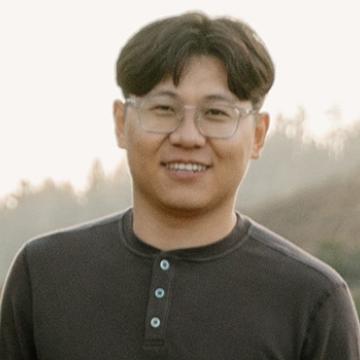
Five years after completing his PhD in computer science at UCSB, Xin (Eric) Wang is returning to campus as an assistant professor in the Computer Science Department. He earned his bachelor’s degree from Zhejiang University and, following the completion of his PhD, became an assistant professor in the Computer Science and Engineering Department at UC Santa Cruz. Aligning with his research interest in machine learning, Wang is also Head of Research at Simular Inc., a startup building computer use agents. Celeste Natera spoke with him earlier this month.
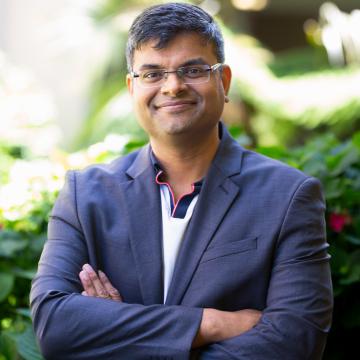
Arpit Gupta, assistant professor in the Computer Science Department at UC Santa Barbara, knows as well as anyone that not all networks are created equal. They range widely, from large, complex, sophisticated systems like those at government agencies or major corporations, which have extensive physical infrastructure and armies of people to support them, to much smaller systems, such as those that provide internet connectivity on Indian reservations or sparsely populated rural areas, where a much smaller and simpler system might be managed by a single person using far less sophisticated, or even repurposed, hardware.
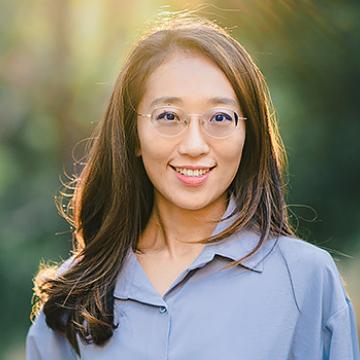
UC Santa Barbara computer science assistant professor Murphy Yuezhen Niu, who is also a physicist, has been awarded a prestigious CAREER Award from the National Science Foundation to support her work in quantum computing.
The five-year, $630,000 grant will fund Niu’s project, “Quantum Pulse Processing — Robust and Programmable Quantum Control for Near-Term Quantum Simulation,” which is aimed at advancing a new paradigm in quantum computer engineering.
“We are leveraging advancements in the emerging area of quantum signal processing to introduce a new paradigm, called quantum pulse processing, to bridge the gap between existing gate-based approaches and purely analog approaches to quantum computing,” Niu wrote in her proposal.
A physicist by training, Niu aims to connect how quantum computers are built and how they are programmed. Current machines operate in a noisy, error-prone range known as the “intermediate scale,” typically consisting of 100 to 100,000 qubits. While they are usually programmed using discrete digital gates, their underlying operations are governed by continuous analog control pulses.